Top 18 Famous Landmarks in Japan
Japan’s most famous landmarks are more than picture-perfect sights - they tell the story of a country where ancient tradition and modern innovation exist side by side. From snow-capped peaks and peaceful temples to vibrant cityscapes, these landmarks reveal Japan’s culture, history, and natural beauty in every form.
Whether you’re drawn by mountain trails, artistry, or architecture, this guide explores the top landmarks in Japan. They’re all places that capture the spirit of the country and deserve a place on every traveller’s list.
For practical advice before you travel, you can read our beginner’s guide to visiting Japan, or discover our top 10 unmissable experiences for further inspiration.

Table of Contents:
Natural Landmarks in Japan
- Mount Fuji
- Jigokudani Monkey Park
- Japanese Alps
- Arashiyama Bamboo Grove & Cherry Blossoms
Historical and Cultural Landmarks in Japan
- Himeji Castle
- Kinkaku-ji (Golden Pavilion)
- Fushimi Inari Shrine
- Todai-ji Temple
- Meiji Jingu Shrine
- Senso-ji Temple
- Hiroshima Peace Memorial Park
- Tsumago
Modern and Urban Landmarks in Japan
- Shibuya Crossing
- Tokyo Skytree
- The Imperial Palace
- Gion District, Kyoto
- Odaiba
Summary
FAQs

Natural landmarks in Japan
Japan’s natural beauty is diverse and dramatic. Imagine volcanic peaks, tranquil forests, alpine trails, and steaming onsens. These famous landmarks in Japan reveal how deeply the country’s landscapes are tied to its culture and spirit.

Mount Fuji
Rising 3,776 metres above Honshu, Mount Fuji is Japan’s tallest mountain and perhaps its most recognisable symbol. A UNESCO World Heritage Site, Fuji has inspired poets, pilgrims, and painters for centuries with its perfect symmetry and spiritual significance.
Even from afar, Fuji is unforgettable. It’s reflected in the lakes of Kawaguchi and framed by the steaming onsens of the Fuji-Hakone-Izu National Park - one of the most scenic areas and famous places to visit in Japan.
Jigokudani Monkey Park
Deep in Nagano’s mountains lies Jigokudani Monkey Park, one of the most unusual natural landmarks in Japan. Here, wild Japanese macaques - known as snow monkeys - bathe in natural hot springs surrounded by snow-dusted pines.
Watching their calm expressions as they soak in the steaming pools is a moment of quiet joy, particularly in mid-winter when the contrast between white snow and dark rock is striking.
Japanese Alps
The Japanese Alps are one of the most incredible natural landmarks in Japan. They stretch across central Honshu, forming a rugged wilderness of serrated peaks, forested valleys, and traditional villages. This is the Japan of clear rivers, high ridges, and timeless rural life.
For adventure travellers, the Alps offer some of the country’s best walking and trekking, including mountain trails such as the Kumano Kodo Pilgrimage Trail - a UNESCO-listed route winding through ancient cedar forests and sacred shrines,
The Alps are also home to the ancient Nakasendo Trail which traces an easy-path between historic post towns. You can complete the trail in the summer on our Gentle Trekking Nakasendo Trail holiday or when it is a winter wonderland on our Nakasendo Trail Winter Walking holiday. In winter, snow blankets the trails, creating a tranquil atmosphere where traditional ryokan stays and preserved post-towns reveal an authentic glimpse of historic Japan.
Arashiyama Bamboo Grove & Cherry Blossoms
Few places in Japan capture serenity like the Arashiyama Bamboo Grove in Kyoto. Walking through its green corridors, the air seems to hum as sunlight filters between thousands of towering stalks. It’s one of the most photographed landmarks in Japan, celebrated for its natural harmony and sense of calm.
Come spring, the area transforms again as cherry blossoms line Arashiyama’s riverside and the gardens of Tenryu-ji Temple burst into bloom. It’s one of the best places in Kyoto to see Japan’s iconic sakura season at its peak. Together, they showcase Japan’s gift for finding beauty in every season.
Historical and cultural landmarks in Japan
Japan’s heritage runs deep, and its historical landmarks tell stories of artistry, devotion, and resilience. From shining pavilions to ancient trade routes, these are the cultural treasures that have shaped the nation.
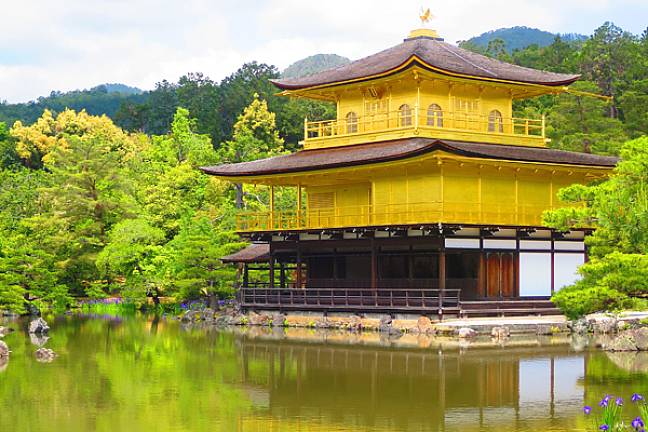
Kinkaku-ji (Golden Pavilion)
In Kyoto, Kinkaku-ji, or the Golden Pavilion, shimmers above its mirror-like pond, reflecting both sunlight and centuries of Zen philosophy. Originally built as a shogun’s villa, it was later transformed into a temple and remains one of the most iconic famous landmarks in Japan.
Himeji Castle
Nicknamed the White Heron Castle for its graceful form, Himeji Castle is Japan’s finest surviving example of feudal architecture. A UNESCO World Heritage Site, it has never been destroyed by war, fire, or earthquake - a rare feat for a wooden structure of its age. The sweeping rooftops and intricate defences show a perfect blend of beauty and strength, making it one of the most admired famous buildings in Japan.
Fushimi Inari Shrine
A walk through the Fushimi Inari Shrine is like stepping into a dream. It’s world-famous for its seemingly endless tunnel of vermilion torii gates that climb Mount Inari’s wooded slopes. Walking through them feels both meditative and mesmerising, particularly in the early morning when the crowds are light.
Each gate is donated by individuals or businesses in thanks for good fortune, creating one of the most visually striking and spiritually significant landmarks to visit in Japan.
Todai-ji Temple
Home to the immense bronze Great Buddha, Todai-ji in Nara is both a spiritual centre and a masterpiece of ancient engineering. The main hall, one of the world’s largest wooden buildings, creates a sense of peace and grandeur that leaves a lasting impression.
Surrounded by sacred deer that freely roam the temple grounds, Todai-ji forms part of a UNESCO World Heritage Site and represents the height of Japan’s Buddhist artistry and architecture. It rightfully stands among the most important landmarks in Japan.
Meiji Jingu Shrine
In Tokyo’s busy Shibuya district lies an unexpected sanctuary: Meiji Jingu, a Shinto shrine dedicated to Emperor Meiji and Empress Shoken. Encircled by a forest of 100,000 trees, it’s a place to slow down, breathe, and feel the contrast between nature and modern life. For many, it’s one of the most meaningful famous places in Japan, serving as a reminder that spirituality can thrive even in the heart of a city.
Senso-ji Temple
Tokyo’s oldest temple, Senso-ji, was founded in the 7th century and is one of the most famous landmarks in Japan. It welcomes millions of visitors each year through its thunder gate, Kaminarimon, and along the lively Nakamise shopping street.
The temple’s incense-filled courtyards and scarlet pagoda provide a vivid encounter with Japan’s living traditions. Visit at dusk when lanterns flicker to life and the crowds begin to fade for a moment of quiet reflection.
Hiroshima Peace Memorial Park
The Hiroshima Peace Memorial Park stands as a powerful symbol of hope, resilience, and remembrance. The Atomic Bomb Dome - preserved exactly as it stood after the 1945 bombing - and the Peace Memorial Museum tell the story of a city rebuilt from tragedy.
Visiting this moving site is an essential experience for travellers seeking deeper insight into Japan’s history. It’s included on our Definitive Cultural Tour of Japan - a journey that brings you face to face with some of the most important landmarks in Japan.
Tsumago
Wander the cobbled streets of Tsumago, and you step back into the Edo period. This beautifully preserved post-town, featured on our Gentle Trekking Nakasendo Trail, connects Kyoto and Tokyo, offering a glimpse into 17th-century Japan.
Locals have maintained its authenticity with strict preservation laws: no overhead cables, no neon signs, only wooden inns and the soft glow of lanterns. It’s a living museum and one of the most charming cultural landmarks in Japan, best explored on foot.
Modern and urban landscapes in Japan
Japan’s cities are as iconic as its temples - futuristic yet deeply rooted in tradition. From neon crossings to quiet geisha districts, these modern landmarks show the country’s remarkable contrasts.
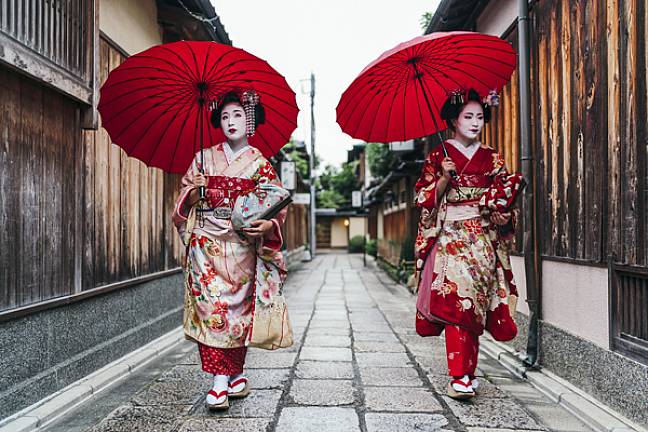
Gion District, Kyoto
The Gion District is Kyoto’s celebrated geisha neighbourhood, where narrow lanes glow under paper lanterns and traditional wooden machiya houses line the streets. In the early evening, you might glimpse a geiko or maiko crossing the cobbles on her way to a teahouse appointment.
Gion embodies the living culture of Kyoto and stands as one of the most captivating cultural landmarks in Japan that truly bridges past and present.
Shibuya Crossing, Tokyo
Known as the busiest pedestrian intersection in the world, the Shibuya Crossing epitomises Tokyo’s pace and precision, pulsing with the city’s energy.
When the lights turn green, hundreds of people surge across from every direction in a spectacle of controlled chaos. It’s a moment of urban choreography that fascinates travellers from every corner of the globe, and is an essential Tokyo experience.
It’s best viewed from one of the cafés above the junction, where you’ll see why it’s one of the most photographed modern landmarks in Japan.
Tokyo Skytree
Soaring 634 metres into the sky, the Tokyo Skytree is Japan’s tallest structure and a modern feat of engineering. Its observation decks provide sweeping views of the capital, and on clear days, Mount Fuji appears in the distance. At night, the tower glows in changing hues - a dazzling addition to the Tokyo skyline and one of the best modern landmarks in Japan.
The Imperial Palace
Home to Japan’s Emperor, the Imperial Palace lies at the heart of Tokyo on the site of the former Edo Castle. The vast grounds, moats, and stone bridges are open to visitors, offering a calm contrast to the high-rise surroundings of the capital’s centre.
The East Gardens are open to the public, offering a quiet retreat that connects modern Tokyo with its samurai past. Spring brings cherry blossoms, making it one of the prettiest landmarks to visit in Japan.
Odaiba
Out in Tokyo Bay, Odaiba showcases Japan’s futuristic side. Built on a man-made island, it’s home to bold architecture, high-tech attractions, and creative art spaces. These include the teamLab Borderless digital museum, a replica Statue of Liberty, and waterfront parks with striking views of the Rainbow Bridge.
From the waterfront, the illuminated bridge offers some of the best night time views of the city. It’s a perfect spot to end a day of exploring Japan’s modern landmarks, as well as a fantastic reminder that innovation is itself a part of Japan’s identity.
Summary
Japan’s famous landmarks form a living tapestry of mountains, temples, cities, and coastlines, each revealing a different facet of the nation’s character. From the sacred peaks of Mount Fuji and the Japanese Alps to the neon glow of Tokyo and the quiet grace of Kyoto, these places show how tradition and progress coexist beautifully here.
Ready to explore the most famous landmarks in Japan? Take a look at our full collection of trekking, walking holidays, and cultural tours in Japan to discover the authentic journeys that uncover the beauty and heritage behind this incredible country. If you have any questions, contact our friendly team, who will be happy to help.

FAQs
What is the best time of year to visit Japan’s landmarks?
The best time to visit Japan depends on the experience you’re seeking. Spring (March to May) is world-famous for cherry blossoms. Autumn (October to November) brings mild weather and vibrant foliage - particularly stunning in Kyoto’s temple gardens and the Japanese Alps.
Summer is ideal for high-altitude trekking, such as climbing Mount Fuji, while winter offers peaceful sightseeing and snow-covered landscapes, especially around the Nakasendo and Nagano regions.
What is Japan’s most famous landmark?
Without question, Mount Fuji is Japan’s most famous landmark. This perfectly symmetrical volcano is revered as a sacred symbol of harmony and endurance. It has inspired centuries of art, poetry, and pilgrimage, and is now recognised as a UNESCO World Heritage Site.
Which famous landmarks should I visit for an authentic cultural experience in Japan?
Focus on Kyoto and Nara for a truly authentic cultural journey. In Kyoto, visit the Fushimi Inari Shrine and Kinkaku-ji (Golden Pavilion). The Gion District offers a glimpse of traditional Japan, where geiko and maiko still walk the lantern-lit streets.
Over in Nara, Todai-ji Temple and its towering Great Buddha reveal the country’s deep Buddhist heritage. Together, these landmarks provide an intimate connection with Japan’s artistry and spirituality.
Which city in Japan has the most famous landmarks?
Both Tokyo and Kyoto deserve top billing for their landmarks, though for very different reasons. Tokyo is home to Japan’s most famous modern landmarks, including Shibuya Crossing, the Tokyo Skytree, and the Imperial Palace.
Kyoto, meanwhile, preserves Japan’s traditional soul, with its exquisite temples, shrines, and gardens such as Fushimi Inari, Kinkaku-ji, and Gion.
Mountain Kingdoms Operations Manager, Harry, created this blog based on his experience of researching trips in Japan for Mountain Kingdoms. This is one of many trips Harry has completed since working with the company including several treks in Nepal, tours in Uzbekistan and Vietnam, a successful ascent of Kilimanjaro and, most recently, a wildlife recce to Ladakh in the Indian Himalaya.