The best wildlife Experiences in Uganda
Mountain Kingdoms team member Kirsty recently travelled to Uganda with her husband Adam, on a private holiday arranged by MK. This was a shorter variation of our 17-day group holiday Gorilla & Wildlife Walking Safari although still following many aspects of the group itinerary.
Both Kirsty and Adam are wildlife enthusiasts, though by no means experts, and were keen to spend time in several national parks to see (and photograph) as wide a variety of birds and animals as possible - although gorillas were very much top of their holiday hitlist.
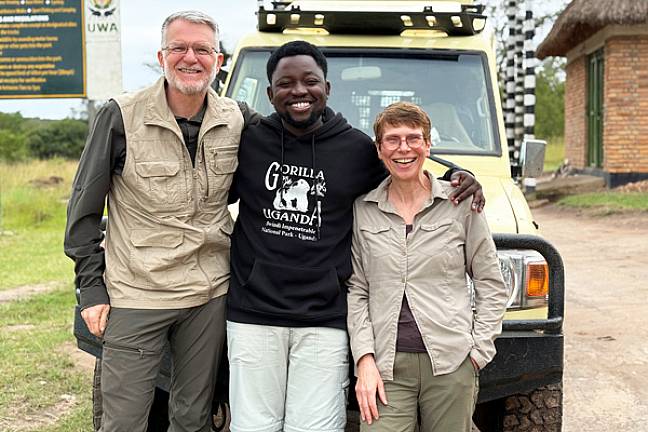
After spending nearly two weeks exploring the forests, wetlands and savannahs of Uganda, accompanied by their expert guide Raymond, Kirsty and Adam understood why the country is known as the 'Pearl of Africa'. From trekking through dense rainforest in search of gorillas and chimpanzees to cruising past hippos and elephants on a boat safari, and seeing prehistoric shoebills in the swamps, Uganda delivered some truly exceptional animal encounters.
Here are Kirsty’s recommendations for the best wildlife experiences in Uganda.
Go gorilla trekking in Bwindi Imepenetrable Forest
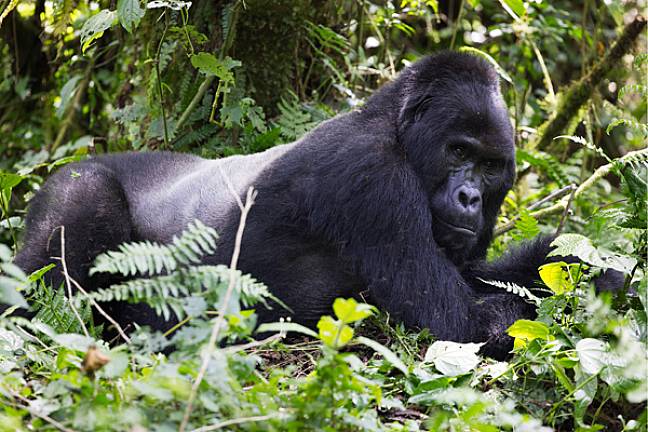
Uganda boasts an impressive diversity of wildlife, but it doesn’t quite match the vast herds found in the great national parks of neighbouring countries such as Tanzania’s Serengeti or Kenya’s Masai Mara. What Uganda offers instead is something even more extraordinary: the chance to see mountain gorillas in the wild.
These critically endangered primates can only be found in the mist-shrouded forests of the Albertine Rift which spans Uganda, Rwanda and the Democratic Republic of Congo. Fewer than 1,100 mountain gorillas remain in the wild, and around a third live in Bwindi Impenetrable Forest National Park, making it one of only two places in the world for gorilla trekking.
Our trekking day began early at the park’s HQ near Buhoma, where we met six other trekkers and our experienced ranger guides. Each small group is assigned a specific gorilla family that has been habituated to human presence - a process that takes several years but helps researchers monitor and protect the population.
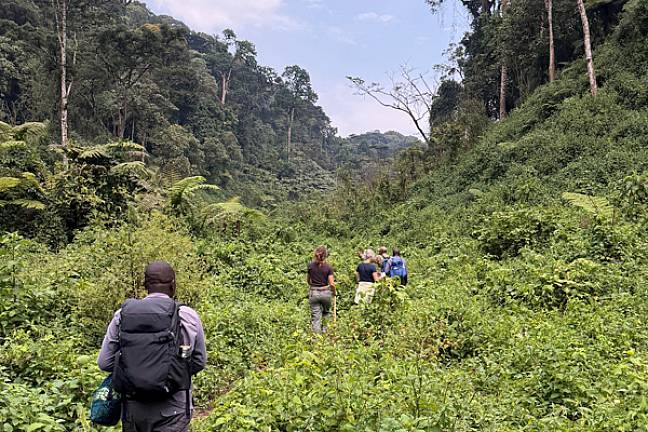
After a safety briefing, we drove up into the hills to begin the trek. The trailhead started among tea plantations overlooking lush valleys and hazy forested peaks. We followed forest paths and faint trails for about an hour and a half before the distant calls of the trackers signalled we were close. Trackers spend the night in the forest near where the gorillas bed down, then follow them to their feeding sites the next day - meaning your chances of an encounter are extremely high.
Eventually, the path disappeared, and our guides hacked through dense vegetation to reach our gorilla family. When we finally saw these great apes, it was a truly breathtaking moment - nothing prepares you for your first close-up view of a massive silverback. For one magical hour we watched the family of eight individuals eat, groom, climb trees and play together. At times we were just a few metres away, yet the gorillas seemed largely uninterested in us, except for one naughty youngster who mock-charged us before quickly retreating back to his family. The hour passed in what seemed like minutes. And, as we trekked back through the forest, we felt incredibly lucky and privileged to have witnessed such an intimate moment in the wild.
Safari in Queen Elizabeth National Park
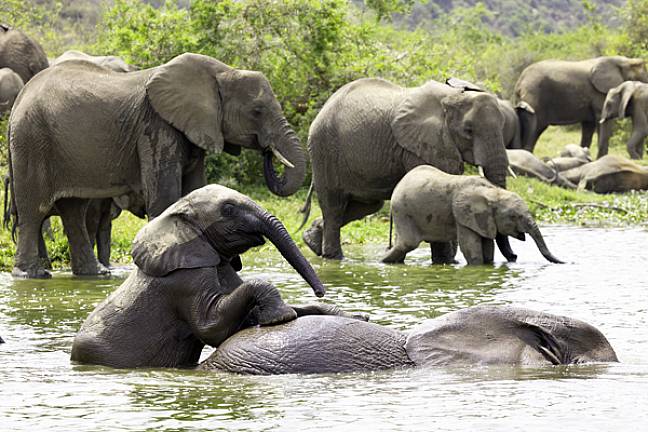
Located between Bwindi and Kibale, Queen Elizabeth National Park is one of the most popular stops on a Uganda wildlife safari itinerary, and it’s easy to see why. The park contains an incredible variety of habitats: savannah, wetlands, forests and saline crater lakes. In turn, this diversity supports an impressive range of animals such as elephants, buffalo, lions, hippos, hyenas, waterbucks and Ugandan kobs, to name but a few.
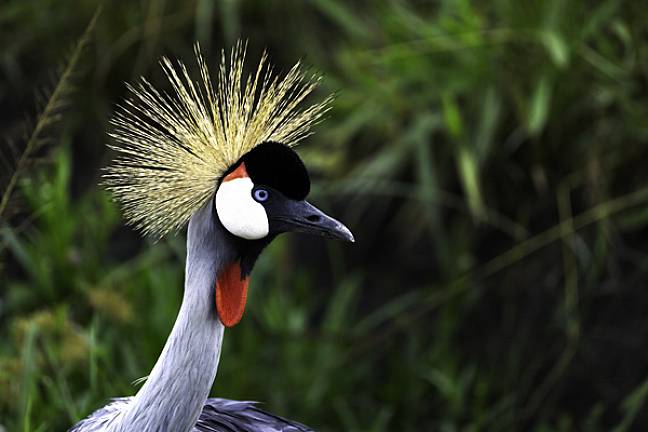
Birdwatchers are also in for a treat as more than 600 bird species have been recorded here. With the help of our eagle-eyed guide Raymond, we managed to identify 87 species in just over two days, including hornbills, kingfishers, bee-eaters, several types of eagles, and Uganda’s striking national bird, the grey crowned crane.
These were our favourite wildlife activities in Queen Elizabeth National Park:
Cruise the waters of the Kazinga Channel on a boat safari
One of our absolute favourite experiences in Uganda was a boat safari along the Kazinga Channel. This broad 40-kilometre waterway links Lake Edward and Lake George and attracts huge numbers of animals and birds to its shores.
Within minutes of setting off we were spotting wildlife everywhere: pelicans gliding overhead, pods of hippos grunting in the water, and elephants gathering along the banks to drink. As the boat cruised slowly along the shoreline we saw Nile crocodiles basking in the sun, monitor lizards prowling the mudbanks and countless birds - from towering marabou storks to tiny but dazzling malachite kingfishers (we counted 30 different species in just two hours). If you want to see wildlife in abundance, this boat ride should definitely be high on your must-do list.
Search for tree-climbing lions in Ishasha
One of Queen Elizabeth National Park’s most famous wildlife sightings is the tree-climbing lions of the Ishasha sector. Sadly, we didn’t manage to spot them ourselves, but the search was still exciting.
Unlike most lions, the Ishasha pride frequently rests in the branches of large fig trees, where they escape the heat and insects of the savannah while keeping watch for prey.
With only around 40–50 lions in the entire area, sightings require a fair bit of luck, but even if you don’t see them, the drive through Ishasha is really enjoyable with elephants, topi, waterbuck and hippo to catch the eye instead. It says a lot about Uganda, that this was the only wildlife 'no show' we had during our entire stay.
Find Flamingos on a crater lake
Flamingos weren’t on our Uganda wildlife bingo card - so they ended up being one of our most unexpected highlights.
As we arrived at Kasenyi Lodge, our guide mentioned we might see lesser flamingos feeding on the salt lake below. These migratory birds flock from Kenya during the dry season to feed on algae in the saline crater lakes of Queen Elizabeth National Park. From our room, we spotted faint pink streaks on the far side of the lake. Through binoculars, they revealed themselves as a small flock of flamingos. Later, our guide drove us down to the shoreline where we could watch them more closely and see their pink reflections shimmering on the lake’s crystalised surface. It was our first-ever sighting of flamingos in the wild and another ‘wow’ moment.
Track chimpanzees in Kibale National Park
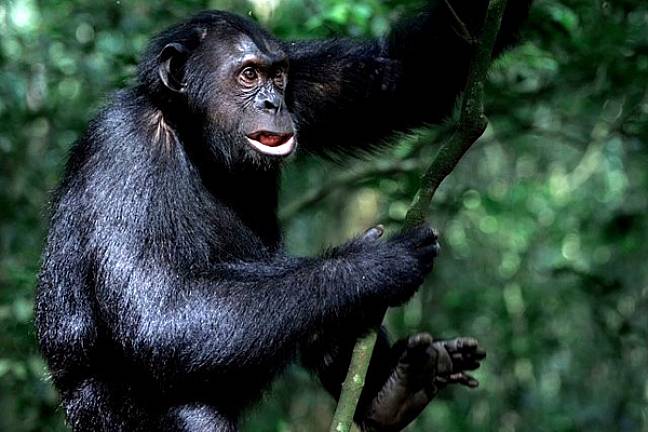
Kibale Forest National Park is home to one of the highest concentrations of chimpanzees in Africa, with more than 1,000 living in the forest in large troops of up to 120 individuals. Several of these troops have been habituated for visitors. Although chimpanzees are very much the understudy to the gorilla superstars of Uganda’s animal kingdom, tracking chimps in Kibale is a very worthwhile wildlife experience in its own right.
Like gorilla trekking, chimpanzee tracking involves hiking deep into the forest as part of a small, guided group. But, because the chimpanzee troops are so large, and can cover a wide area, all trekking groups spend their hour observing the same troop.
Chimpanzees are far more energetic and unpredictable than gorillas. Much of the time they are high in the forest canopy, moving from tree-to-tree and feeding on fruit, leaves and insects, before dropping down to the ground to travel with their troop. Following them through the forest was exhilarating. We heard their loud, echoing calls long before we saw them, and once we did, it felt like the entire forest came alive with sound and movement.
During our time with the chimps we watched them swing through branches, chase each other and perform acrobatic leaps. Mothers carried babies on their backs, and males competed with loud shrieks and macho displays to prove their alpha credentials. It was endlessly entertaining and very dynamic.
One piece of advice if you're going chimp trekking is to wear a hat as chimpanzees have no hesitation about relieving themselves from above. You have been warned!
Monkey around at the Bigodi Wetland Sanctuary
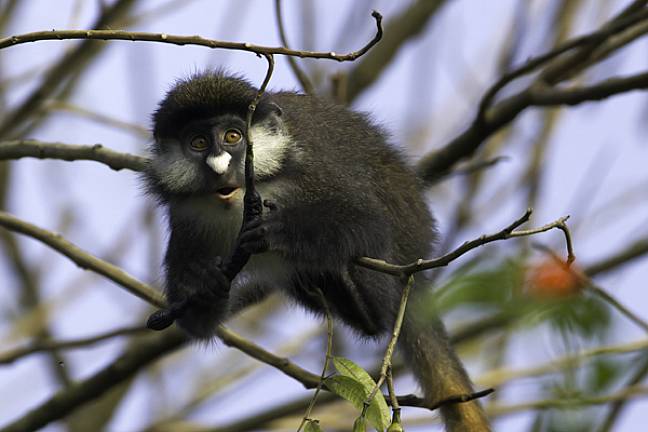
Gorillas and chimpanzees might be Uganda’s most famous primates, but the country is also home to around 20 species of monkeys. One of the best places to see several of them in a small area is at the Bigodi Wetland Sanctuary, located on the edge of Kibale Forest National Park. This community-run reserve protects a lush area of wetland and forest that provides a refuge for monkeys, which prefer to avoid the larger and more dominant chimpanzees in nearby Kibale. Thanks to its lower canopy and more open vegetation, wildlife is often easier to spot here than in the dense, neighbouring rainforest.
The best way to explore the sanctuary is on a guided nature walk led by a member of the local Bigodi community. Despite the name, the trails are generally dry and easy to follow during the dry season, and it’s easy to spend a few relaxed hours wandering through the forest.
During our nature walk we spotted vervet monkeys, two types of colobus monkeys and several lively red-tailed monkeys. They were full of personality, and more than a little cheeky. Birdlife is also exceptional. The sanctuary is home to around 200 bird species, and we particularly loved seeing the brilliantly coloured sunbirds flitting through the foliage.
One of the highlights of visiting Bigodi was learning about the local culture and traditions from our female guide. Along the way, she told us how bark from fig trees is still processed into cloth and showed us plants that provide food and traditional medicines. After our walk we visited some of the other Bigodi community projects: we helped the ‘Coffee Queen’ grind and roast beans, danced with the local women's support group, and learned how banana “beer” is brewed with the 'Bigodi Banana Man'. It was a fascinating and fun few hours, and a great way to get to know a few of the local people.
Explore Lake Mburo National Park on foot and after dark
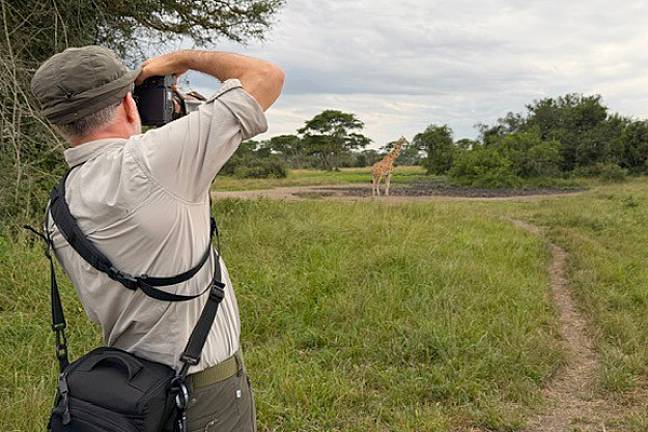
Like Queen Elizabeth National Park, Lake Mburo National Park is well worth spending a couple of days exploring. The park may be smaller than many of Uganda’s other reserves, but it offers something a bit different from the standard jeep safari. Because there are no elephants or lions roaming the park, visitors can enjoy wildlife encounters that aren’t possible elsewhere in Uganda. Here are two of our favourite safari activities at Lake Mburo:
Walk on the wild side
Lake Mburo is one of the few places in Uganda where you can take a guided walking safari (there are bikes available as well if you prefer two wheels). Accompanied by an expert armed ranger, we set off on foot across open savannah, enjoying the thrill of being immersed in the landscape rather than observing it from a vehicle. It’s a wonderfully different way to experience the African bush. The wildlife was abundant and, at times, surprisingly close. During our walk we encountered giraffes, buffalo, zebras, impalas and bushbuck grazing nearby. The birdlife was equally impressive. Raptors were everywhere, and at one point we counted seven magnificent eagles perched above us on the branches of a single tree.
Look for leopards on a night safari
While daytime game drives are rewarding, night safaris in Lake Mburo offer the chance to see one of the park’s only alpha predators – the leopard.
Around 25 leopards live within the park’s 370 square kilometres, making daytime sightings quite rare. But once darkness falls, these elusive beasts become far more active and easier to find. With the help of a park ranger and a spotlight, our guide slowly drove along the park’s tracks as we scanned the bush and trees for glowing eyes reflected in the light. Owls, hippos, bushbabies and hyenas are all active at night and there was a real sense of anticipation with every flicker of light. Suddenly, there was a signal from another vehicle – three sweeps of their torch – and we knew a leopard was close. And there it was, about 20 metres from our jeep, stalking an impala in the darkness. The encounter was brief but thrilling as it soon took off into the bush after its prey. Such a memorable last jeep safari before we made our way back to Entebbe.
Search for shoebills in the Mabamba Swamp
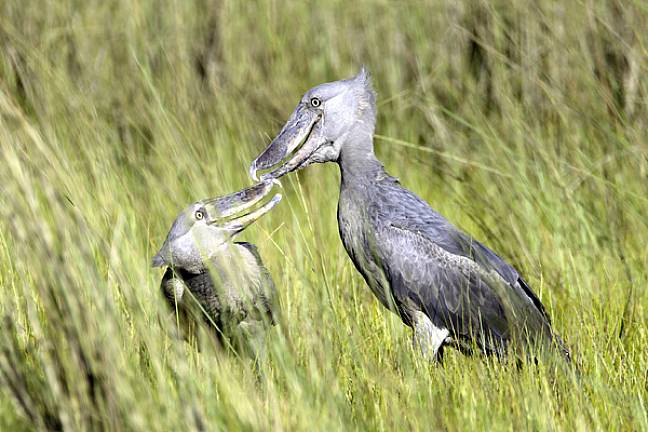
One of Uganda’s most unusual wildlife encounters happens just outside Entebbe in the wetlands of the Mabamba Swamp, where the rare and prehistoric-looking shoebill stork lives in small numbers.
This vast papyrus swamp sits on the edge of Lake Victoria and is reached by boat from Entebbe in around an hour. Once inside the wetland, we transferred to a traditional wooden canoe, gliding through the reeds in the narrow water channels. The local boatmen/guides know the swamp inside out and took us directly towards the most recent shoebill sightings, forcibly pushing our canoe into position through the reed-choked channels with immense effort and skill – like punting on steroids.
When we eventually get close to one of the 15 or so birds in the swamp, (sightings are likely but not guaranteed), it was utterly unlike any other bird we'd ever seen. Around four feet tall, with a ridiculously heavy beak and a quiff of feathers on top of its impervious head, it stood statue-like, staring at us from its beady, unblinking eye. There was something rather unnerving but totally compelling about it.
Shoebills feed mainly on lungfish, using the hook on the end of their bill to spear prey in shallow water. They lay just two eggs, and usually only one chick survives - one reason why they remain so rare.
During our boat trip we were lucky enough to see both an adult and a juvenile hunting, flying and then feeding together. It was the perfect wildlife finale before heading to the airport and a magical way to end our Uganda adventure.
Why Uganda is one of Africa’s most rewarding wildlife destinations
For wildlife lovers like Kirsty and Adam, Uganda offers something truly unique: the chance for close encounters with rare creatures combined with classic safari experiences - and all within one relatively compact itinerary. Add in welcoming communities, beautiful landscapes and exceptional birdlife, and it’s easy to understand why it’s a country that will leave a lasting impression.
As Kirsty says, “If you’re looking for a safari that feels adventurous, immersive and a little bit different from others in Africa, Uganda might just surprise you in the best possible way”.
Although Kirsty and Adam followed a shorter itinerary than our small group Gorilla & Wildlife Holiday in Uganda. They covered many of the same wildlife activities, and Kirsty would be delighted to talk about her experiences if you are considering a holiday in Uganda. Here are some of the questions she could help with:
Uganda wildlife safari FAQs
How difficult is gorilla trekking in Uganda?
Gorilla trekking can range from moderately challenging to quite strenuous, depending on where the gorilla family is located that day. Treks may last anywhere from one to several hours through dense forest and steep terrain. However, ranger guides set a manageable pace, and the experience of seeing mountain gorillas in the wild makes the effort more than worthwhile. To make it a little easier you can hire a porter at the start of the trek. They will carry your backpack and help you on the trickier terrain. It’s also a good way of providing employment and income for local people.
How much does a chimpanzee or a gorilla trekking permit cost in Uganda?
A gorilla trekking permit currently costs around $800 per person in Uganda whilst chimpanzee trekking permits are around $250. The permit allows you to trek with ranger guides and spend one hour with a habituated gorilla or chimpanzee family. You also get a certificate of achievement at the end of your trek. At Mountain Kingdoms we include the cost of the permits in your holiday price and obtain them for you. Numbers are limited and gorilla permits can sell out quickly in peak season, so it’s best to book your holiday in plenty of time. The revenue helps protect the gorillas, conserve their habitat, and support the local communities who play a crucial role in their survival.
When is the best time to visit Uganda for wildlife?
Uganda can be visited year-round, but the dry seasons (June-September and December–February) are generally considered the best for wildlife viewing. During these months, trekking conditions are easier in the forests, and animals tend to gather around water sources in the national parks. Temperatures can be hot - in the high 20s and low 30s - but it tends to be cooler in the rainforests and at altitude. Even in the dry season, rain is possible.
What animals can you see on a Uganda safari?
Uganda offers a remarkable diversity of wildlife. Visitors commonly see elephants, lions, buffalo, hippos, giraffes, zebras, antelope species and numerous monkeys, as well as mountain gorillas and chimpanzees. Leopards and hyenas are also present in some parks but are more elusive. Species tend to be divided between the parks and forests, so it pays to spend time in a number of locations.
Is Uganda good for birdwatching?
Yes, Uganda is widely considered one of the best birdwatching destinations in Africa. With habitats ranging from rainforest and wetlands to savannah and crater lakes, the country supports over 1,000 bird species, including the iconic shoebill stork, flamingos and the grey crowned crane. Be sure to bring a good pair of binoculars.
How long do you need for a Uganda wildlife trip?
A 12–17 day itinerary is ideal for experiencing Uganda’s highlights. In 12 days you will be able to include all of Kirsty’s activities: gorilla trekking in Bwindi, chimpanzee tracking in Kibale, game drives and boat safaris in Queen Elizabeth National Park, safari walks and drives at Lake Mburo and a boat ride into the Mabamba wetlands. If you stay a few days longer you will have time to travel further north to Murchison Falls National Park, where you can take a boat ride on the Nile and see rhinos at the Zhiwa Rhino Sanctuary.
Is Uganda good for walking?
It’s a great destination for a walking holiday. Not only can you do walking safaris in a couple of locations but there are some really good trails through the scenic countryside and up into the Rwenzori Mountains. If you travel on our small group Gorilla & Wildlife Holiday, Uganda, you will combine safari activities with several good walks that take you to panoramic viewpoints and through wildlife-rich landscapes. On walks where animals may be in the vicinity, you will be accompanied by an armed ranger guide.
Related blog posts:
The birds and animals of Costa Rica - our top 10 wildlife sightings