
- Grade:
- ?
Moderate
- Duration: 15 days from the UK
- Walks on: 7 days
- Private Departures Available
Flight inclusive from £6695, Land only from £5000
Discover traditional Japan on a guided Shikoku walking holiday, following sections of the 88-Temple Pilgrimage Trail through the rural landscapes of Japan's fourth-largest island.
Highlights
- Visit two of Japan's 12 original castles at Kochi and Matsuyama
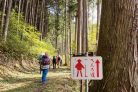
- Walk sections of the historic 88-Temple Shikoku Pilgrimage alongside devout pilgrims
- Take in far-reaching views from Mount Tsurugi, Shikoku's second-highest peak
- Enjoy Japanese cuisine, from market street food to elaborate multi-course banquets
- Experience temple prayers and soak in onsen baths at traditional ryokan inns
Reviews
The Shikoku Pilgrimage Trail is a cultural walking holiday offering an ideal introduction to Japan for active first-timers looking to venture beyond the must-see sights, or for those returning and seeking a more authentic experience. Expect fairytale castles, tranquil temples, mountain walks, restorative onsen baths and delicious multi-course Japanese banquets, alongside a lively street market and the neon-lit buzz of Osaka.
Shikoku is the smallest of Japan's four main islands and remains relatively undiscovered by Western visitors. Despite its connections to the mainland by suspension bridges and ferry, and sprawling coastal cities, it offers a quieter, more rural side of Japan, where you can walk peaceful trails, explore historic temples and gain an insight into traditional Japanese life away from the crowds.
An important part of Shikoku's history and cultural heritage is the remarkable Shikoku 88-Temple Pilgrimage, a circular Buddhist route associated with Kobo Daishi, the revered monk who founded Shingon Buddhism. Unlike most pilgrimage routes, which follow a linear path, the full Shikoku circuit covers some 1,200km, linking 88 distinctive temples across the island. Devout pilgrims, known as ohenro, spend several months completing the full route, although much of it now follows roads.
Our guided small-group holiday explores all four of Shikoku's prefectures, with six carefully chosen day walks taking in some of the pilgrimage's best sections. You begin at Temple 1 and finish by walking into Temple 88, sharing the experience with pilgrims who have completed the full henro. Walks are mostly uphill and include plenty of steps. On longer days, private coach transfers usually offer the option to shorten the walk. We've therefore graded this a moderate cultural walking holiday although the walks are of varying length and challenge. In addition to mountain trails, there are also some short sections alongside roads, while the first and final walks follow quiet village lanes, offering a glimpse of everyday life in rural Japan.
Please note: This holiday is operated in conjunction with our partners in Japan, helping us ensure departures have the best chance of running. You may therefore be travelling with guests who have booked through other operators. Previous groups have typically included Australian, American, Canadian and British travellers. Single travellers who choose not to pay a single supplement will be paired with another group member of the same sex.
At a glance
Moderate
Duration: 15 days from the UK
Walks on: 7 days
Max. Altitude: 1,955m/6,414ft, Mt Tsurugi, Day 7
Private Departures Available
Guaranteed to run for a minimum of 4 clients
Maximum group size: 12
Accommodation types: Hotels, Ryokan, Temple
Meal arrangements: All breakfasts and 9 dinners are included. Lunches are not included. Your guide will help you organise your lunches which may be picnics or meals taken in local restaurants or cafes. Your guide can also advise you on restaurant options for dinner for your three nights in Matsuyama.
Itinerary overview
| Day | Activity |
|---|---|
| 1-2 | Fly to Osaka. Transfer to hotel. Welcome dinner. |
| 3 | Train to Mount Koya in the mountains of the Kii Penninsula. Visit Okunoin Cemetary and Mount Koya temple complex. |
| 4 | Transfer to Tokushima on Shikoku Island.Walk the first section of the Shikoku Pilgrimage from Temple 1. |
| 5-6 | Mountain day walks between temples. Cable car descent from Temple 21. Transfer to central mountains to stay at Ilya Onsen. |
| 7 | Chairlift and day walk to summit of Mount Tsurugi, the second highest peak on Shikoku. Walk across traditional vine bridge. |
| 8-9 | Travel to Kochi City. Sightseeing including Katsurahama Beach, Hirome Ichibancho Market and Kochi Castle. Continue to Matsuyama City. |
| 10-11 | Walk from Temple 44 to Temple 45. Explore Matsuyama city, bathe at Dogo Onsen and visit Matsuyama Castle. |
| 12 | Temple day walk including Temple 81 on Mount Shiromine. Transfer to Kotohira. |
| 13 | Final temple walk to finish the pilgrimage at Temple 88. Farewell banquet. |
| 14-15 | Private group transfer to Takamatsu airport from Kotohira. Fly to London via Tokyo with option to stop off. |
Leader: Local Leader, Japan
Your trip will be led by an English-speaking Japanese guide. They are all highly experienced, and will greatly enhance your experience on holiday. They will both guide you on the trail, and accompany you on all train and road journeys.

Holiday Itinerary
Day 1 - Fly London to Osaka.
Fly overnight from London to Osaka. Our preferred group flights are overnight on Japan Airlines from Heathrow.
 Overnight: Overnight flight to Osaka
Day 2 - Arrive Osaka. Transfer to hotel. Welcome dinner.
You will be met on arrival into Kansai airport and transferred to your central Osaka hotel. After checking in, your guide will be waiting to meet you and the rest of your group in the hotel lobby at 6pm. They will take you for a welcome banquet in a nearby restaurant, the first of many fine multi course traditional meals you will enjoy on this holiday. Your guide will explain the beautifully presented dishes to you as they are served and advise on meal etiquette.
Please contact us if you’d prefer to arrive a day or two earlier in order to have time to adjust to the local time zone before starting the tour. Your hotel is centrally located, and Osaka is relatively easy to explore independently.
Overnight: Monterey Grasmere Hotel Or Similar, Osaka
Day 3 - Travel to Mount Koya and explore on foot.
This morning your main suitcase will be sent ahead to your Day 5 accommodation. For the next three days you will travel with just your daypack, ideal as you make your way to the station on foot to take the first of two trains, followed by a funicular and a local bus to Mount Koya, high in the mountains of the Kii Peninsula.
Mount Koya is the headquarters of the Shingon sect of Japanese Buddhism, founded in the 9th century by the monk Kobo Daishi, who also founded the Shikoku pilgrimage. Pilgrims on the Shikoku 88 pilgrimage traditionally visit Mount Koya to ask Kobo Daishi to bless their journey; we will follow this tradition.
Tonight you will stay in a Shukubo, pilgrim accommodation in a Buddhist temple, and you can leave your day sack here before walking 2km through the atmospheric Okunoin cemetery to see Kobo Daishi’s mausoleum. Your guide will tell you about the countless red-garbed Jizo Bosatsu statues – the guardian of children and pilgrims - and highlight the tombs of acclaimed Samori warriors and even corporate tombs for the employees of companies like Panasonic and Toyota, as you walk.
Lunch isn’t included but your guide will direct you to local restaurants where you can enjoy a bowl of freshly prepared noodles or rice – quick, delicious and great value. Picture menus are common in local restaurants, and there is also often an English translation, otherwise mobile translate apps may be used by both you and the restaurant staff.
After lunch you’ll continue your guided exploration of Mount Koya’s temple complex; the grounds are beautifully landscaped and home to the largest rock garden in Japan, the Banryū-tei Garden. In October you may see some early autumn colour here as you’re at an altitude of 800m above sea level. Look out for the beautiful but smelly ginkgo trees.
Returning to your Shikubu, you’ll be shown to your traditional style room with tatami matting, a low-level table with hot water to make green tea, and bed on the floor. There will be a yukata robe (with instructions) for you to wear during your stay, and time before dinner to bathe in the communal bathing areas – one for men and one for women. The bathtubs are usually made of beautiful Hinoki cypress wood; bathing is only available in the evening. Dinner is simple but tasty vegetarian Buddhist ‘Shojin-ryori’ cuisine, served at low level tables.
Overnight: Shukubo (Temple Lodging) Or Similar, Mount Koya
Day 4 - Travel to Tokushima. Short walk from Temple 1. Visit Temples 2 and 3.
For early risers there will be an opportunity to join the temple’s early morning prayer ceremony before breakfast, and even if you don’t, the morning prayer gong will probably rouse you just after 6am.
After breakfast a private coach will take you back down from the mountains to the coast, to the port of Wakayama, where you board a ferry across the Seto Inland Sea as a foot passenger. There is a lounge onboard where you can eat the lunch you’ll have stopped to buy en route from a small supermarket. There is usually a good selection of sushi boxes, sandwiches, snacks, dried fruit (fresh fruit is generally only sold in local grocery stores) bakery items, coffee, DIY frozen smoothies and drinks – and all much fresher and tastier than their UK equivalents. A number of lunches on this tour will be picnic style and you’ll enjoy sampling the various options available. Your guide will be happy to offer advice if you’re completely bewildered but a try it and see approach usually reaps dividends!
After two hours, with nice views of Awaji Island en route, the ferry docks in Tokushima City. Here you meet your small coach and driver, who will probably be with you for the remainder of the tour, and your Shikoku adventure begins in the first of the four provinces, Tokushima.
Although it is a contiguous loop, the Shikoku pilgrimage officially starts here at Temple 1 and you may see devout pilgrims buying traditional ohenro attire – white robe, bag, woven hat and a pilgrims staff – before setting off. Pilgrims will obtain a handwritten stamp (for around 500 yen) in a special henro pilgrims book nōkyōchō at each temple they visit; you may also like to observe this practise at the temples you visit. We recommend the accordion-style goshuincho book, which can be purchased at Temple 1, but please remember that the stamps are religious symbols and not just tourist collector items, and you should visit the main hall Kondo and smaller Daishi-do at each temple to pay your respects before buying a stamp.
The first temple, Vulture Mountain Temple, was built in the 8th century and from here we walk through quiet suburban streets to Temple 2, the Celestial Temple, where Kobo Daishi completed 37 days of esoteric ritual at the age of 42. Atmospheric Temple 3, Konsen-ji, is home to a blood-red pagoda and bridge, and from there it is a half-hour drive by coach to tonight’s simple shukubō temple lodging.
Walking: 3km/1.8miles, negligible ascent and descent.
Overnight: Shukubo (Temple Lodging) Or Similar, Tokushima Prefecture
Day 5 - Three peaks walk from Temple 11 to Temple 12 - 12km, 6 hours (but can be halved with optional coach transfer).
Today you have your first proper mountain walk - walking poles are recommended as it is mostly uphill.
Your coach driver will drive you to Temple 11, Wisteria Well, situated at the foot of Mount Shosan-ji. After exploring the temple, you will walk the henro-korogashi over three peaks to Temple 12. This is regarded as one of the finest walks on the whole 88-Temple Pilgrimage.
The trail starts steeply, ascending through chestnut, azalea and walnut forest. A small clearing after the first 3km offers a welcome rest spot before you continue upwards, climbing a series of steps and then traversing the ridgeline with occasional views back down over the valley and town below. Another clearing, around three hours from the start of the walk, is your picnic lunch stop, with loos and a drinking water tap. The coach will be waiting a short walk away from the lunch stop for anyone preferring to just do half the walk. If you are continuing, there is a further two and a half hours or so to go on a quiet trail which passes a thousand-year-old tree and then descends through bamboo forest, a small hamlet and persimmon orchards. At the bottom of the valley, you cross a bridge by a waterfall before starting the final ascent, which brings you out onto the wide, lantern-lined track leading to magnificent Temple 12.
A 20-minute drive through forest-clad fold mountains brings you to tonight’s traditional onsen inn accommodation where your forwarded luggage, a hot onsen bath and a delicious multi-course meal, will be waiting for you.
Walking: 11.9 km/7.4 miles, (ascent of 1,230m/4,035ft and descent of 560m/1,870ft), 6 hours.
Overnight: Ryokan, Tokushima Prefecture
Day 6 - Drive to Temple 20 - 1½ hours. Walk to Temple 21 - 7km, 2-3 hours.
This morning a scenic drive through rural countryside above the river will take you to Temple 20, Crane Forest, on the 550m summit of Mount Washigao. This pretty temple complex with large crane statues and a fine three-storied pagoda is believed to have been founded by Kobo Daishi in 799.
Setting out from a small village below the temple, the first few hundred meters of todays’ walk is on road, crossing a bridge over the river and then starting to ascend steadily. A mountain footpath takes you up through the forest on a series of flights of stairs, before around two hours later, you emerge onto a quiet road which continues gently upwards to Temple 21, Mystical Dragon. More steps up through impressive sky-scraping cedars bring you into the beautiful temple complex where there is plenty to explore before you take the 10-minute cable car down to the small town of Naka. This is the longest cable-car in western Japan, with great views out across the Tsrugi Mountains to the sea on a clear day. Look out for a family of life-size wolf statues in a small clearing as you descend over the lush cedar-clad ridges before arriving in the picturesque Naka River Valley.
If you’ve bought a picnic, there is a small park with a covered seating area where you can eat close to the cable car station, or you can choose from several restaurants offering quick and tasty lunch options. After lunch it is a three-hour drive to the next ryokan along the beautiful Yoshino-gawa River Gorge. Eventually you will spot remote Iya-Onsen through the trees, perched dramatically on the gorge-side high above the river. Allow time to try out both spectacular onsen here – the hottest is in the main hotel building with views out across the valley and the other is open air with a tranquil riverside setting, requiring a short ride down in the hotel’s own funicular.
The food at Iya Onsen is superb; dinner will be kaiseki – an elaborate, visually pleasing Japanese banquet that incorporates seasonal and local delicacies.
Walking: 7.1 km / 4.4 mi, (ascent of 460 m/1,510 ft and descent 470 m/1,540 ft), 2-3 hours.
Overnight: Hotel Iya-Onsen Or Similar, Iya Valley
Day 7 - Drive to base of Mount Tsurugi - 1½ hrs. Chairlift and walk to summit area 1,955m - 4km, 1-2 hours.
There is a choice of western or Japanese style breakfasts this morning, elaborate and worth lingering over, taken in the hotel café which has panoramic views of the Iya Valley through the floor to ceiling glass windows.
The coach will take you back along the valley and then on to the base of to Mount Tsurugi, the second highest peak in Shikoku at a height of 1,955 metres, nearly 6,500 feet. Here you take a low-level single-seat chairlift from Minokoshi, 300m up to Nishijima Top Station at 1,750m and then walk the final stage to the summit zig-zagging on good paths across the mountain side through sasa (dwarf) bamboo. On a clear day the views are far-reaching, and the hillside beautifully washed with red, orange and yellow in the autumn. The final section is on raised wooden walkways to protect the summit area, and there are spectacular 360-degree views from the very top with various viewpoints looking out over the surrounding mountains in different directions.
You retrace your steps, possibly on an alternative path, down to Minokoshi and travel a short distance by coach to visit Nagoro, the region’s famed scarecrow (doll) village and stop for a picnic lunch. Nagoro is home to hundreds of life-sized stuffed scarecrow dolls created by artist Tsukimi Ayano to ‘re-populate’ her once thriving home-town village, which currently has a population of under 30 people.
The final stop for the day is a crossing of a kazura-bashi vine bridge which stretches 45 meters across the Iya River, suspended 15 metres above the flowing water. It is said the bridge was made by refugees of the Heike Clan hiding in the area after their defeat in the Genpei War. This is a popular tourist stop but nonetheless interesting to see. There is also an impressive waterfall just along from the bridge.
You have a second evening to relax at Iya Onsen; enjoy the silky-soft waters on the onsen and another artistic multi-course haute-cuisine banquet. There is a small nicely stocked giftshop in the hotel, and look out for the pretty Varied tits by the funicular which the operator may invite you to feed with sunflower seeds.
Walking: 4 km / 2.5 mi (ascent 330 m/1,320 ft and descent of 330 m/1,320 ft), 1-2 hours.
Overnight: Hotel Iya-Onsen Or Similar, Iya Valley
Day 8 - Travel to Kochi - 1½ hours. Visit Katsurahama Beach and Temple 31.
Today you will leave Tokushima Prefecture and travel south to Kochi Prefecture, where two days in and around the city of Kochi provides a contrast the rural tranquillity of the Iya Valley.
Kochi is a major agricultural hub famous for its greenhouse horticulture. The climate is warm and the land fertile, so rice grows extremely well along with other fruit and vegetables. Kochi prefecture is Japan's largest producer of ginger, and you’ll see fields of large, refreshing buntan, a grapefruit-like citrus fruit, and scenic hillside rice terraces, along the mountainsides.
Your first stop in Kochi is Katsurahama Beach; here you walk along the promenade to a small picturesque shrine and admire the giant bronze statue of visionary Samurai warrior Ryoma Sakamoto, a local and national hero who played a crucial role in the revolution of Japan from feudal system to modern democracy. Try a Japanese ice-cream from the food complex before you continue into the city to visit the Hirome Ichiba Market. Kochi (previously known as Tosa province) has a whaling history that dates back 400 years but these days is renowned for its skipjack tuna/bonito. Katsuo no Tataki, skipjack flame-seared with garlic, ginger and citrus, is the signature dish of the city and sold by many of the vendors in Hirome Ichiba Market.
After lunch you will visit Temple 31, associated with Monju, the deity of wisdom, and consequently popular with students and their parents! The temple has an impressive five-story cypress wood pagoda, beautiful maple and gingko trees and a temple garden designed by the famous master monk of the Rinzai Sect, Muso Souseki that is famed throughout Japan for its natural beauty.
Your hotel is in the central shopping area of Kochi City, a short walk from the castle park. The group dinner is at a local restaurant and will undoubtedly include Katsuo no Tataki for those that eat seafood.
Overnight: Sansuien Hotel Or Similar, Kochi
Day 9 - Sunday market. Visit Kochi Castle. Explore Uchiko traditional village. Transfer to Matsuyama.
Each Sunday the main road leading to Kochi Castle is closed to traffic and lined with hundreds of market stalls selling every type of local produce imaginable. Whilst a hotel breakfast is included this morning, nothing beats the hot sweet potato tempura pieces from the popular Imo-ten stall, eaten with a cup of yuzu juice alongside the locals in the street.
Fairytale Kochi Castle is one of Japan’s 12 original castle keeps and has all its original Edo-era architecture in the main citadel. This morning you pass through the impressive 17th century main gate to visit the castle. Take in the views out over Kochi from the four-sided open-air balcony at the top of the keep and look out for the fierce ninja repellent spikes. The keep is accessed by steep wooden ladders which link the six floors, and there are polished wood halls, traditional chambers with original tatami matting and wooden panels and some historical displays.
Then it is on to Shikoku’s third Prefecture; Ehime, with a stop en route to walk along the high street in the historic town of Uchiko which once flourished as a centre for traditional wax and paper. The elegant buildings here are traditional merchant houses with pale yellow lime walls and latticed windows. You can find out more about life here during 18th and 19th century through some of the open ‘museum’ houses, and despite being a designated preservation zone, Uchiko Old Town is delightfully un-touristy.
Ehime Prefecture is a top citrus producer in Japan, yielding around 200,000 to 210,000 tons of fruit and over 40 different varieties annually. You’ll find evidence of this everywhere you go, with plenty of orange flavoured treats and snacks available to buy and juice to drink.
Your accommodation for the next three nights is a modern hotel centrally located in Matsuyama city. Your guide will suggest suitable dinner options; there are plenty of restaurants close by with everything from simple noodle bars to Italian restaurants!
Overnight: A N A Crowne Plaza Matsuyama Or Similar, Matsuyama City
Day 10 - Walk from Temple 44 to Temple 45 - 12km, 4-5 hours. Return to Matsuyama.
Matsuyama is the biggest city in Shikoku, set in a coastal basin with the Seto Inland Sea to the west and mountains as a backdrop. Your hotel will be centrally located, and we recommend the Mitsukoshi department store, which has an extensive food court in the basement, if you fancy buying your picnic lunch for today from somewhere other than a supermarket.
A drive of around an hour by coach up into the forest-clad Kumakōgen Highlands brings you to Temple 44 and the start of today’s walk, on the trailhead below the temple. You start on a small footpath climbing through towering cypress trees. There is a short section alongside the road before you peel off onto another footpath, descending through bamboo forest to a small hamlet. The official trail continues on tarmac passing fields of rice and vegetable crops. There is a small shelter on the trail where you might take your lunch (depending on group size), or the coach may come to transfer you 10 minutes to a bigger rest area.
The trail continues on a combination of forest footpaths, quiet unpaved forestry tracks and a short section on tarmac, before finally descending on a wooded path past a series of rock caves to emerge dramatically above Temple 45. After time to explore the atmospheric temple complex, which is built into the rocky mountainside, you descend on more steps to the valley bottom where your coach will be waiting to transfer you back to Matsuyama.
Walking: 11.7km / 7.3 miles (ascent 650m/2,130ft and descent of 580m/1,900ft), 4-5 hours.
Overnight: A N A Crowne Plaza Matsuyama Or Similar, Matsuyama City
Day 11 - Sightseeing in Matsuyama.
Today is a more relaxed day to exploring some of the main sights of Matsuyama City on foot and by public transport.
Depending on the location of your hotel you will either walk, take a short tram ride or the low-level single chairlift to the foot of Matsuyama Castle which is set on a hilltop dominating the city. Built over a quarter of a century ago, and finally completed in 1627, Matsuyama is another of Japan’s 12 original castle keeps.
There is plenty to see inside the castle including exhibits of weaponry, haiku poetry and imperial scrolls, again accessed by wooden ladder-style stairs. The views from the top are far-reaching over the city below and out to the Seto Inland Sea.
Next stop is Temple 51, Stone Hand, popular with couples trying to conceive and, at the other end of the spectrum, also by those wishing to stave off senility! There is a three-storey pagoda and a giant 16m-tall Daishi statue on the hill behind the temple. Look out for the yakimochi stalls at the front of the temple – these delicious, sweet treats are highly recommended as a snack, hot and fresh off the grill.
The final sightseeing stop is Dogo, a great spot to find a restaurant for lunch before visiting Dogo Onsen, which has a history dating back over a thousand years and is said to be the oldest onsen in Japan. Here you will put on a yukata robe, bathe, enjoy green tea and a sweet treat, and view the imperial bathing suite. The waters are very hot here at around 42°C; there is a tatami matting rest area for anyone who doesn’t want to bathe.
You guide will accompany you back to your hotel and the remainder of the afternoon and evening are at leisure.
Overnight: A N A Crowne Plaza Matsuyama Or Similar, Matsuyama City
Day 12 - Transfer to Temple 80 - 1¾ hours. Walk from Temple 80 to Temple 81 and Temple 82. Transfer to Kotohira - 1 hour.
This morning you leave Matsuyama and head back east to Temple 80 which, due to its age, is a Special National Historic Site and has the oldest temple bell on Shikoku.
Your walk to Temple 81 starts on quiet lanes through the village. This is a fertile area with lots of interesting crops in the fields you pass including buntan, peppers, olive trees and of course, rice. From a small cemetery you ascend on a stepped footpath up onto the Goshikidai lava plateau before finally emerge onto a road which you follow for a short stretch before turning off onto another woodland trail and descending to Temple 81. There are benches to eat your picnic lunch on and you’ll have time to explore the attractive temple complex, and collect a temple stamp if you wish. You will also see lots of small lucky cat and black crow figures that have been left by visitors praying for good fortune - you can buy your own figure in the temple shop, read the fortune telling slip inside and leave the figure at the temple.
The walk continues after lunch, when you initially retrace your steps back uphill, and then continue on an undulating path through rhododendron, dwarf and full-size bamboo. The final section of the walk is again along a quiet road leading to the impressive steps up to Temple 82. Look out for the Ushioni bull demon statue here, and the incredible lantern-lit corridors of the main hall which contain thousands of small statues bought and dedicated by worshippers.
Your coach will be waiting for you below the temple, and from here it is around an hour to your final destination; Kotohira, a small town in Kagawa Prefecture famous for its large Shinto shrine complex dedicated to sailors and seafaring.
Your accommodation tonight and tomorrow is an onsen ryokan in the town.
Walking: 13.5 km / 8.4 mi (ascent 655 m / 2,150 ft and descent of 335 m / 1,100 ft), 4.5 hours.
Overnight: Ryokan, Tokushima Prefecture
Day 13 - Transfer to Temple - 87m, 1 hour. Walk from Shikoku Henro Museum to Temple 88. Return transfer to Kotohira -1hour 20 minutes.
Today you will walk your final stage of the Shikoku Pilgrimage into Temple 88. It is an hour by coach to Temple 87 with its big open, sandy courtyard, and then a further 15 minutes to the small but interesting Shikoku Henro Museum. In addition to pilgrim clothing and artefacts, the museum has a three-dimensional topographical relief map you can light up to see all the temples you have visited and the mountains passes you’ve crossed.
Your final walk is mostly on quiet rural lanes, but there is one section of footpath alongside a busier road where you will need to walk in single file. Your guide may choose to use the coach to avoid the busiest road section. Finally you will arrive at Temple 88, Okubo, on the side of Mount Yahazu, and the conclusion of your pilgrimage. Temple 88 is known as Great Hollow Temple but also called Completion of the Vow.
There is an excellent Udon noodle bar below the temple, if you haven’t bought a picnic lunch, and you’ll have time to eat and then explore your final temple complex. The grounds here are impressive with plenty to see; look for the eternal flame that is a memorial to the victims of Hiroshima atomic bombing, the traditional walking sticks - kongozue - left by pilgrims who have completed their circuits to be burnt, and the underground passage beneath the Daishi-do which has sand collected from all 88 of the Shikoku pilgrimage temples set into the floor.
Your coach driver will take you back to Kotohira, where you can relax in the onsen and enjoy a final kaiseki banquet to celebrate with your group.
Walking: 11 km / 6.8 mi (ascent 538 m / 1,765 ft and descent of 252 m / 826 ft), 3 hours.
Overnight: Ryokan, Tokushima Prefecture
Day 14 - Tour ends.
Your final morning is at leisure in Kotohira. Depending on the timing of your group transfer, you may like to do some souvenir shopping or walk up the stone steps to Kotohira-gu Shrine. There are 785 steps to the main shrine and an additional 583 to the inner shrine so allow at least 2-3 hours for the round-trip. Luggage can be left at the main desk of your ryokan.
There will be a group transfer to Takamatsu airport, probably around lunchtime or early afternoon. The return flight to London is via Tokyo. Please ask us if you would like to extend your holiday with time in Tokyo or prefer to return from a different airport. Kotohira has a central train station from where you can easily connect to other destinations in Japan.
Overnight: Departure day
Day 15 - Arrive London.
You flight will arrive into London Heathrow in the morning.
Loading...
Hold your place
Not quite ready to book? Why not call us on +44 (0) 1453 844400 to hold a no obligation place while you make up your mind?
Optional supplements
-
Single Room Supplement
From £705
No Surcharge Guarantee
No surcharges will be applied to your holiday after you book. Prices on this website are updated regularly. The Flight Inclusive holiday price, or Land Only holiday price, will be confirmed to you at the time you make your booking. There will be no surcharges after your booking has been confirmed.
Flight inclusive holidays
The 'flight inclusive' holiday prices shown on this website are based upon our preferred airlines and the best priced economy class fares we are able to secure at the time of publication.
We will be able to advise on fares with alternative airlines, upgrades to Business Class, and the options for flights from regional UK airports, please contact us for more details.
Booking your holiday
-
Deposit
From £400.00
For the majority of our holidays, a deposit payment of £400.00 per person is required to secure your place(s), however a small number of holidays require a higher deposit - please refer to the holiday itinerary for more details. If the holiday departs within 60 days, a deposit of £1,000.00 per person is required.
Book now!
- Book your small group holiday securely online – click the ‘Book’ button next to your chosen departure or visit our Book now page
- Complete and return a Booking Form available to download here.
- Call us on +44 (0)1453 844400 and one of our travel specialists will talk you through the booking process.

What’s included
- 12 x breakfasts and 9 x dinners
- Good standard hotel accommodation in Osaka, Kochi and Matsuyama on a twin-share basis
- Traditional ryokan and shukubo (temple) accommodation elsewhere on a twin-share basis
- An English-speaking Japanese leader
- Baggage transfers as per the itinerary
- All road transport, by private vehicles, buses and trains
- Sightseeing as specified
- Economy class return air fares from the UK & UK Departure Tax (flight inclusive only)
- Single, timed group airport transfers for international flights on arrival and departure
- Carbon offsetting with the Ecoan Tree Planting Project (for clients taking our flight inclusive option)
- A free Mountain Kingdoms gilet
What’s not included
- Travel insurance
- All lunches and 3 dinners not included
- Airport transfers (if your flights do not coincide with the group flights)
- Tips
Private Departures

Shikoku Pilgrimage Trail Japan - Private Departures
If you would prefer to travel just with your partner, friends or family, we can arrange a private departure of this holiday. You follow the same itinerary, but travel on dates that suit you. Alternatively we can include elements of this holiday in a bespoke Tailor Made itinerary. Contact our friendly team for details and prices, and to make a booking.